
About Me.
My name is Erikas Rimkevicius. I'm a university student at UCP. I specialize in video editing content, focusing on stylistic and highly edited visuals. I've been studying and learning editing for 7 years, both self-taught, and through education.I've worked with a number of different clients, some of who's work I've featured in my portfolio of work visible below this section, and am continuously searching for new opportunities to improve my ability, work on more and more ambitious projects, and test my own abilities.


Blogs.
AI and Photography
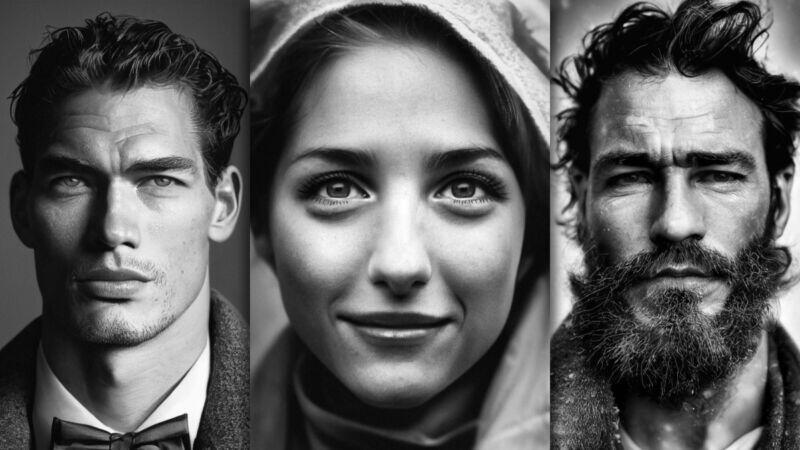
AI has exploded tremendously in recent years, and its use and evolution in photography has been both nothing short of miraculous, and also downright terrifying.Before, being able to tell whether a photo was computer-generated was easy, as the technology was still making tons of mistakes, but now with AI under its wing, with machine-learning algorithms, this is no longer the case. AI is capable of creating photographs that are able to fool millions.A recent example, as depicted in the photo of this blog, in February of 2023, a person by the name of Jos Averys, started gaining tons of traction on their instagram and other social media accounts, due to their impressive photography work. However, after he started to gain a following, Jos felt like he needed to come clean, as he felt like 95% of his following did not know his posts were AI-generated.He goes on to say the process doesn't end with just putting in a prompt, however it is concerning that Jos had basically gained a following over his photography posts, where his own fans had no idea that they weren't real people in the photos.The reason this is concerning is because, if people can be so easily fooled like this, they could easily be fooled by something much more concerning. However, having this tool isn't completely negative for the world, and it has useful capabilities. AI like this can be able to be employed in image recognition, it can significantly help speed up workflow in a deadline-heavy environment, as well as help explore potentially new artistic possibilities. This could really help freelancers, and anyone working in the photography, movie, forensics and many other industries, helping a lot of people.People are rightfully worried about their jobs, however. With AI being so good, and people being able to just type out a prompt and generate photorealistic images, what's the point of photographers and graphic designers ?The people currently working in these fields may have to be required to incorporate AI into their skill set, just to make ends meet, which could impact the industry as a whole greatly, creating big divides between real photographers, and people that generate them. The conversation becomes about ethics and morality. Is it ethical for AI to exist in such a way, where it takes away people's jobs, takes away artistic expression, stylistic identity and human agency, even if it increases workflow and creates new jobs ?With the technology being this new its easy to see why many are thinking it is spiraling out of control, and AI, and technology as a whole, is getting too good too fast. People may become biased towards either authentic, real photographers, or the perfection of AI's generative image creation, sparking a great divide between two sides of the same coin.I personally believe that the use of AI in generative modelling, such as creating 3-Dimensional landscapes for video games, movie sets, and other pieces of media can be good for the industry, as these can take a long time to work with and they don't have to be taken at face value, but rather reworked with human intervention into something great, speeding up the work and creating something that may have otherwise not existed. However, I don't really like the use of it in photo editing, and the photorealism on people. It is daunting, and I could easily see how it could become problematic.AI in the future could definitely be used for bad, further surpassing the already prevalent social engineering and internet manipulation tactics criminals use to gain trust, later turnt to monetary gain, profited from the misfortune of others. It could also become an issue of legality and copyright, as it's very easy to test and replicate things that are already very famous and well-known, both for the purposes of education and monetary gain, which could cause lost profits for the company whose contents have been AI generated and repurposed, and legal troubles for the person generating them.Intellectual property is very important for brands, individuals, even more so people who are freelancers and entrepreneurs. To them, their name and image means everything. In the photography sphere, especially so. The author of the photos is who the people come for - their photography style and aesthetic that is unique to them. The ability to replicate that with the use of AI really takes away from all their hard work.I think it is important we think about the creatives that built this industry and created the work in the first place.
social media
The world we live in today cannot exist without social media. It is everywhere, everyone's connected, everybody's using it. How did that come to be, why is it so popular, how did it come to be and how did it become so industrialized ?We as humans are social creatures, so as the internet starts to gain rise, and people start how useful it is, people start thinking of practical uses for it. For social media, the beginning was platforms such as MySpace or Friendster. They were early versions of what would later become Facebook. As the latter two started to die out, Facebook stepped up to the plate and took the internet by storm.People from all over the world were sharing their activity on their pages, people were able to add and message one another, people were able to post statuses, it was the beginning of something big. Very rapidly. Smartphones and computers kept getting better and people were able to use this social media app to talk to each other on the go, and so Facebook went on to become one of the titans in the market. Mark Zuckerberg, creator of Facebook, quickly became one of the richest people in the world, as the platform Facebook was the cornerstone of communication in the late 2000s and early 2010s.Fast forwarding to now, and we have Instagram, an app owned by Facebook, featuring a lot of the same features, with a higher focus on photos, stories that are viewable by people that follow your account, hashtags and more. X, formerly known as Twitter, another social media app where people post quick and efficient, short, concise information, news, updates, opinions, stories with a limited character count, with the focus being text-based communication, and real-time updates.These social media giants have become more than just a platform for people to exchange images, messages or opinions, they have become large media corporations, where most major companies host their products and advertisement on these platforms. They use marketing techniques such as targeted advertising, contact with influencers for publicity among their fanbases, and have even started to have their own identities on the social media platforms, engaging with the community in a way that resonates with their audiences.People nowadays turn to social media for opinions and recommendations of products, as social media is where all the discourse and conversation happens, which is why every brand and company has to have their own Twitter and Instagram, to drive traffic and gain a wider reach amongst all types of customers, as social media has become so ingrained in our day-to-day life, people of all ages access and view social media every day.Social media is so popular because of the connectivity and access. You are able to write whatever comes to mind, and people are able to see it instantly, across the world. It's important for both individuals, influencers and companies to build credibility around their social media accounts if they wish to grow, for companies it's all about showcasing your expertise, products and services in as transparent and authentic a way as possible.Compared to traditional marketing, the previously mentioned wide reach across the world and connectivity is that much more powerful online, with the use of social media. Real-time feedback between customers and social media accounts allows companies to use social media to satisfy their customers a lot quicker from the comforts of their own homes. However, the credibility and authenticity of traditional marketing is unmatched. When people show up to a store or a company in person, they get to experience the quality in person, of the advertisement, experience and support, which helps with credibility.Print and television is still a widely used tool for traditional marketing, capable of creating a strong brand presence, and helps a company better target their audience, especially the older folk who aren't as well connected as the younger generation. Being able to reach the audience that's not online is also very important.In short, social media is a crucial tool for brand building and allowing companies and users to exchange opinions, goods and services like never before. And with the efficacy of current technology, evolution of brand identity, marketing and advertisement, it's easy to see why every company in the current day and age is on the platforms we all love to use for our daily activities.Looking back to when it all started, and just how little time ago, makes it all the more impressive how far we've come with social media.